
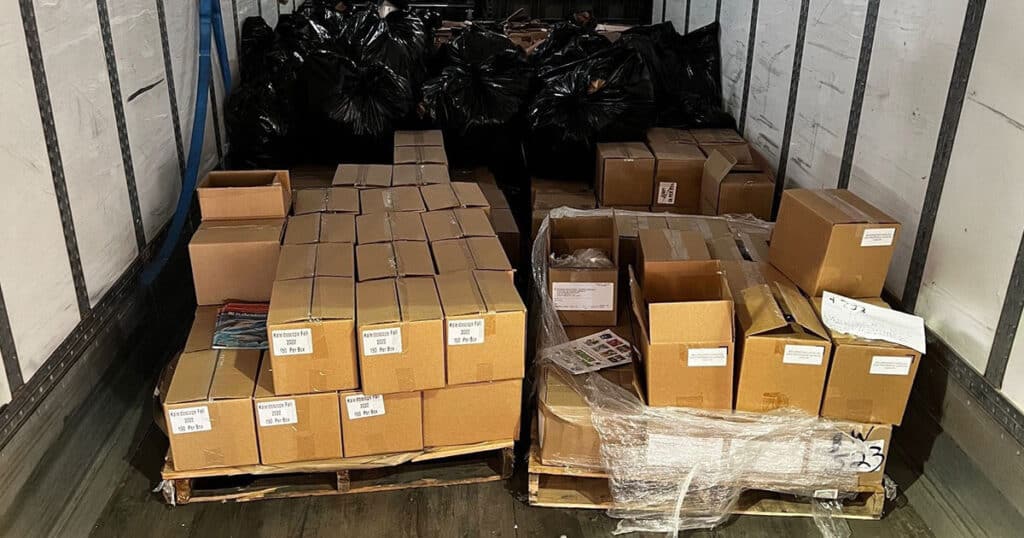
Sustainable Practices in Product Destruction
Millions of products require secure destruction each year, and how you handle them matters. Improper waste disposal risks compliance failures, brand exposure, and environmental impact. For forward-thinking organizations, sustainable product destruction isn’t just necessary – it’s a competitive edge.
Key Takeaways
- Product destruction is essential for compliance, brand protection, and environmental stewardship.
- Sustainable product destruction methods minimize landfill use, maximize material recovery, and support zero-waste goals.
- Each product destruction method has unique operational advantages.
Risks of Unsustainable Product Destruction
Traditional product destruction methods can create serious challenges for organizations.
- Risk of regulatory non-compliance, leading to fines and legal action
- Potential for products to re-enter the market, damaging brand integrity
- Increased resource depletion, pollution, and greenhouse gas emissions
These unsustainable practices make it difficult for companies to achieve their ESG goals.
Benefits of Sustainable Product Destruction
Sustainable product destruction delivers measurable value across compliance, brand protection, and environmental performance.
- Regulatory compliance: Meet or exceed all local, state, and federal requirements for product destruction and waste handling.
- Brand protection: Prevent unauthorized resale and safeguard intellectual property through secure, documented processes.
- Environmental stewardship: Reduce landfill use, conserve resources, and lower carbon footprint by maximizing recycling and energy recovery.
- Operational efficiency: Streamline destruction, documentation, and reporting for improved workflow and accountability.
- Cost savings: Minimize disposal fees and unlock value from recovered materials, supporting long-term financial sustainability.
By prioritizing sustainable destruction, companies demonstrate leadership and operational excellence through their commitment to eco-friendly waste disposal.
Sustainable Product Destruction Methods
The following industry practices represent the most effective approaches for organizations seeking to minimize risk, maximize resource recovery, and support zero landfill initiatives.
Secure Shredding and Granulation
Best For:
- Pharmaceuticals
- Confidential documents
- Branded packaging
- Prototypes and product samples
- Financial records
- Recalled consumer goods
Process Overview:
Mechanical shredding or granulation renders items completely unusable and unrecognizable, ensuring sensitive information and proprietary components are irretrievably destroyed. The resulting material is then sorted for recycling or energy recovery, supporting strict compliance, data security, and landfill diversion.
Certified Incineration with Energy Recovery
Best For:
- Contaminated goods
- Expired food
- Hazardous materials
- Medical waste
- Cosmetics and personal care items
- Counterfeit goods
- Non-recyclable plastics
Process Overview:
Incineration in high-efficiency, controlled facilities ensures complete destruction of hazardous or contaminated materials while capturing heat for electricity or steam generation. This method diverts waste from landfill, produces renewable energy, and supports both compliance and sustainability objectives.
Advanced Material Separation and Recycling
Best For:
- Multi-material products
- Packaging
- Consumer goods
- Electronics (e-waste)
- Automotive parts
- Appliances
- Batteries
Process Overview:
Products are disassembled and separated by material type, such as plastics, metals, and paper, with each stream sent to specialized recycling partners for further processing.
Waste-to-Energy Conversion
Best For:
- Non-recyclable, high-BTU waste streams
- Laminated packaging
- Contaminated paper products
- Certain plastics (e.g., films, wraps)
- Rubber and tires
- Composite materials
Process Overview:
Residual waste that cannot be recycled is processed in waste-to-energy facilities, where it is converted into electricity or heat for industrial and municipal use. This method offers a sustainable alternative to landfilling, reduces greenhouse gas emissions, and helps organizations achieve zero landfill status.
Chemical and Thermal Treatment
Best For:
- Industrial byproducts
- Hazardous chemicals
- Complex composites
- Solvents and chemical residues
- Pesticides and agrochemicals
- Paints and coatings
- Contaminated soils
Process Overview:
Chemical and thermal treatment methods use advanced processes to neutralize hazardous substances and break down complex materials at the molecular level, rendering dangerous compounds harmless and enabling recovery of valuable elements for reuse.
Sustainable product destruction practices are essential for reducing the risks of brand exposure and regulatory non-compliance associated with traditional waste disposal. By using advanced methods like waste-to-energy and material recycling, these solutions ensure security and protect brand integrity while helping organizations achieve their ESG goals.
Frequently Asked Questions
How can product destruction be environmentally friendly?
Environmentally friendly product destruction uses methods that prioritize recycling, energy recovery, and landfill diversion.
What happens to materials after product destruction?
After destruction, materials are sorted for recycling, energy recovery, or safe disposal. Recyclable components are processed and reintroduced into the supply chain, while non-recyclable fractions may be converted to energy or disposed of in compliance with environmental regulations.
Can product destruction support a circular economy?
Yes. By maximizing material recovery and returning valuable resources to the supply chain, sustainable product destruction directly supports circular economy principles and reduces reliance on raw materials.
How does LJP ensure environmental responsibility in product destruction?
LJP prioritizes recycling and waste-to-energy conversion, diverting as much material as possible from landfill and supporting a zero landfill future.
What types of products can be destroyed sustainably?
LJP handles a wide range of products, including electronics, pharmaceuticals, food, packaging, and consumer goods, using tailored methods for each material type.
How do I know my products have been destroyed securely?
LJP provides detailed documentation, product destruction certificates, and compliance reports for every project.
Can product destruction support my company’s ESG goals?
Absolutely. Sustainable destruction reduces environmental impact, supports circular economy initiatives, and provides data for ESG reporting.
Environmentally friendly product destruction uses methods that prioritize recycling, energy recovery, and landfill diversion.
After destruction, materials are sorted for recycling, energy recovery, or safe disposal. Recyclable components are processed and reintroduced into the supply chain, while non-recyclable fractions may be converted to energy or disposed of in compliance with environmental regulations.
Yes. By maximizing material recovery and returning valuable resources to the supply chain, sustainable product destruction directly supports circular economy principles and reduces reliance on raw materials.
LJP prioritizes recycling and waste-to-energy conversion, diverting as much material as possible from landfill and supporting a zero landfill future.
LJP handles a wide range of products, including electronics, pharmaceuticals, food, packaging, and consumer goods, using tailored methods for each material type.
LJP provides detailed documentation, product destruction certificates, and compliance reports for every project.
Absolutely. Sustainable destruction reduces environmental impact, supports circular economy initiatives, and provides data for ESG reporting.
Ready to implement sustainable product destruction practices that protect your brand and the environment? Request a consultation and discover how our solutions can support your compliance and sustainability objectives.